Entry · Ref XMZXD80T
How to Turn Your Cafe Into a Local Landmark
- Posted
- 2026-11-18
- Last amended
- 2026-11-18
- Account
- @elliotgjpj286
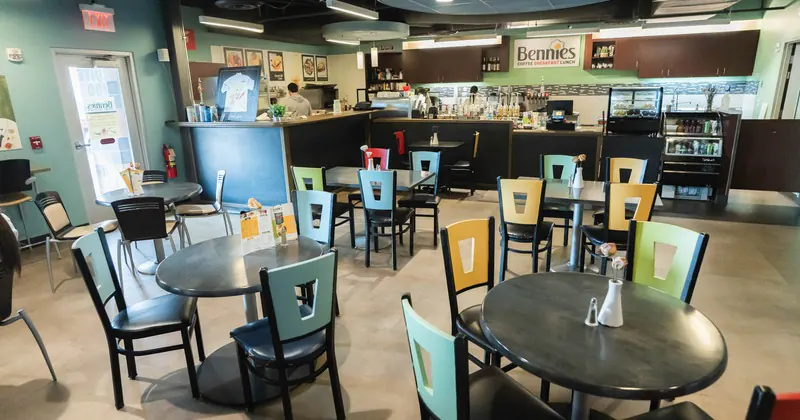
A successful cafe does more than sell coffee. It gives people a place they want to return to, talk about, photograph, recommend, and eventually claim as part of their own routine. That is what turns an ordinary business into a local landmark. Not a tourist attraction in the flashy sense, but a place woven into the social fabric of a neighborhood.
Landmarks are rarely built through one grand gesture. More often, they emerge from dozens of careful decisions, repeated consistently over time. The owner chooses the right corner, then pays attention to the sightline from the street. The barista remembers names. The pastry case looks generous at 8:00 a.m. And still intentional at 2:00 p.m. The music suits the room. The outdoor sign is visible from half a block away. The lighting flatters faces. The menu makes sense for the area, not for an abstract ideal customer invented in a marketing deck.
If you want your cafe to become a destination, you need to think beyond transactions. People can get caffeine almost anywhere. What they cannot get everywhere is a strong sense of place.
Start with the question people rarely ask
Most owners ask, “How do I get more foot traffic?” The better question is, “Why would someone choose to walk past three other options and come here on purpose?”
That shift matters because landmarks are deliberate choices. People detour for them. They use them as meeting points. They tell newcomers, “You’ll know it when you see it.” If your cafe is interchangeable with every other neat little coffee shop with exposed brick, pale wood, and an earnest seasonal latte, then your ceiling is low even if your drinks are good.
A local landmark needs a distinct identity, but distinct does not have to mean eccentric. In practice, it usually comes down to three things: a recognizable atmosphere, reliable quality, and a role in local life. Miss one of those and you might still build a profitable cafe, but not one people talk about with affection.
I have seen beautifully designed shops fail because they felt cold and generic after the first visit. I have also seen imperfect spaces become neighborhood institutions because they understood exactly who they were serving and kept delivering on that promise.
Your location matters, but its story matters more
There is no way around it, location has outsized influence on what a cafe can become. A corner site with visibility from two directions, natural foot traffic, and some room for outdoor seating has an obvious advantage. But a weaker location can still become memorable if the business gives people a reason to seek it out.
What matters is how the space connects to the rhythms of the area. A cafe beside a commuter rail stop needs speed and clarity during rush hours. One near a park can lean into weekends, families, and lingering. A shop in an arts district should look and behave like it belongs there, not like it was copied from an airport concourse.
The most successful operators read the neighborhood almost like anthropologists. They notice who is on the street at 7:30 a.m. Versus 3:00 p.m. They know where parents stop after school pickup, where freelancers settle with laptops, where older residents bennies.cafe Cafe prefer to sit, and which nearby businesses send customers looking for a quick coffee or a long break.
A local landmark feels inevitable in its setting. After a while, people cannot imagine the block without it.
Design for memory, not just aesthetics
A lot of cafe interiors are pleasant and forgettable. There is nothing wrong with pleasant, but forgettable does not create loyalty. If someone leaves your cafe and struggles to describe it, you have a branding problem even if your logo is polished.
Memorable design usually includes one or two strong visual anchors. It might be an original tiled counter, a distinctive green facade, a dramatic pastry display, a hand-painted wall menu, or a row of window seats that catch the afternoon light. These details do not need to be expensive. They need to be clear and repeatable.
One small independent shop I visited had a narrow footprint and almost no budget for renovations. Instead of trying to hide the constraints, the owners leaned into them. They painted the entire entry a deep matte blue, installed a brass bell on the door, and built a standing espresso rail along the front window. The effect was immediate. From the street, you could recognize the shop in seconds. Inside, the layout encouraged short, lively visits. People talked about “the blue cafe with the window rail.” That is how memory works. It attaches itself to something specific.
Good design also solves practical problems. A local landmark cannot afford to be photogenic but awkward. If the queue blocks the entrance, if there is nowhere to wait for drinks, if the acoustics make conversation tiring, the room will fight your ambitions. The most beloved cafes often feel effortless because someone has quietly worked through the friction points.
Think about the customer’s full path. What they see from outside. Whether the door is heavy. Whether they can read the menu without craning their neck. Where they set down a bag while paying. Whether the bathroom feels like an afterthought. Whether the lighting at 6:30 a.m. And 7:00 p.m. Supports the mood you want. These are operational choices disguised as design details.
Build a menu people can attach to your name
If your menu looks like everyone else’s, your cafe will work harder for recognition. A landmark usually has at least one item, and often several, that people associate directly with the place.
That does not mean gimmicks. It means signature. A house mocha made with real ganache instead of syrup. A cardamom bun baked in limited batches every morning. A tomato sandwich in August that becomes a small local event. A cold brew served with orange peel and tonic in summer. A thick hot chocolate in winter that regulars start asking about before the weather turns.
Signature items help for a simple reason. They give people a story to tell. “You have to try the cinnamon toast” is stronger than “It’s a nice place.” Specificity travels.
The trap is overcomplication. Many cafe menus sprawl because owners want to satisfy every possible customer, but a crowded menu is hard to execute and even harder to remember. Focused menus tend to perform better, especially in the first years. They create faster service, more consistent quality, less waste, and a clearer reputation.
There is a practical test worth using. If a first-time guest asks, “What should I get?” can your staff answer instantly and enthusiastically? If not, the menu may lack identity.
Reliability is part of charisma
There is a romantic idea that landmark businesses thrive on pure personality. Personality helps, but reliability is what turns charm into habit. A cafe that feels magical on Tuesday and disorganized on Thursday does not become an institution. It becomes a gamble.
This is where many ambitious owners lose ground. They invest heavily in branding, design, and social media, then neglect the less glamorous systems that protect consistency. Drink calibration slips. Opening routines vary by shift. The pastry order is late twice a week. Seating is dirty during the lunch rush. The music is perfect one day and jarring the next. Customers may not name these problems one by one, but they feel the instability.
Landmark status depends on trust. People trust that your espresso will be good at 8:15 a.m. When they are half awake. They trust that there will be one clean table somewhere. They trust that if they bring a friend from out of town, the place will live up to the recommendation.
Consistency is not dull. It is the base layer that makes everything else possible.
Staff shape the reputation more than the owner does
Owners often imagine themselves as the soul of the cafe. In reality, the soul is distributed across every shift. Customers build their impression from repeated interactions with whoever happens to be behind the counter, clearing tables, pulling shots, and running food.
A landmark cafe has staff who understand hospitality as something more than politeness. They know how to greet regulars without turning the room into a private club. They can read whether a guest wants conversation or speed. They can recover from mistakes without defensiveness. They keep standards without acting rigid.
Training matters here, but so does hiring for temperament. You can teach workflow and recipes more easily than warmth, judgment, and situational awareness. One excellent barista with genuine presence is worth more than a clever menu board and a week of paid ads.
There is also a financial angle owners sometimes resist. Better staffing feels expensive until you calculate the value of retention. A regular who visits four times a week for three years is worth far more than a one-time customer pulled in by novelty. People return to places where they feel recognized, comfortable, and confident they will be treated well.
Here is a short test for your team culture:
- Can every staff member describe the cafe in one sentence, in a way that sounds coherent across the team?
- Do they know the top three items you want associated with the business?
- Can they resolve a small complaint on the spot without hunting for a manager?
- Do they understand when to speed service and when to let the room breathe?
- Would you trust them to serve someone important to you on your busiest day?
If the answer to several of these is no, your brand is less stable than it looks from the outside.
Give people reasons to use your cafe as a reference point
A local landmark is not just admired. It is used. People say, “Meet me at the cafe on the corner,” or “Turn left at the cafe with the patio.” That kind of language comes from physical presence, but it also comes from cultural presence.
You want your cafe to become part of local routines and shared moments. Morning coffee before school drop-off. Saturday pastries after the market. A first date spot that feels safe and low pressure. A place where neighborhood groups gather before events. A warm room people rely on when the weather turns bad. A stop after the dog walk. A quiet table where someone writes job applications for three weeks and then returns months later to celebrate getting hired.
These use cases are not manufactured through slogans. They appear when the cafe is available to the community in practical, welcoming ways.
That might mean opening half an hour earlier than competitors because your area has early commuters. It might mean adding hooks for bags under the counter stools because local office workers always arrive with laptops. It might mean keeping a family-friendly table zone even if solo workers would occupy it all day. It might mean offering a simple neighborhood discount at a slow hour instead of launching another generic promotion online.
Not every customer segment is equally valuable to your identity. The trick is choosing which groups you are truly designed to serve and doing it exceptionally well.
Events can help, but they are not the foundation
Many owners hear “community” and immediately start planning open mic nights, latte art throwdowns, workshops, and pop-ups. Events can work. They can create energy, bring in new faces, and deepen loyalty. But they can also become expensive distractions that tire staff and confuse the brand.
The best events fit the existing character of the cafe. A quiet shop known for thoughtful service might host a monthly author reading or a ceramic pop-up. A lively all-day cafe might do neighborhood jazz on a Sunday afternoon. A shop with strong bakery sales could collaborate with local makers during holiday weekends. The format matters less than the fit.
Too many events send the opposite message of what you intend. They suggest the cafe is trying to manufacture relevance instead of earning it through daily excellence. I would rather see a shop host four excellent, well-attended events a year than twenty undercooked ones that leave everyone mildly stressed.
If you do run events, pay attention to what they do to the room. Does the event attract people who later return on ordinary days, or does it only create a temporary spike? Does it disrupt your regulars? Does it make the staff feel proud or frazzled? Those answers tell you whether the tactic supports landmark status or just chases activity.
Signage, windows, and curb appeal do quiet heavy lifting
Owners sometimes underestimate how much reputation is built before a person walks in. The exterior of your cafe sends signals every hour you are open and many hours when you are not.
A good storefront should communicate three things immediately: that the business is alive, that it is cared for, and that it has a point of view. Clean windows matter. So does legible signage, visible hours, and an entrance that feels inviting rather than tentative. If your lighting disappears at dusk, or your menu is hidden, or your window display looks stale, you are losing people before hospitality has a chance to work.
The outside should also hint at the inside experience. A fast grab-and-go cafe can signal efficiency through clear menus and visible service flow. A more leisurely neighborhood room can show abundance, warmth, and seating. Even small details, a few well-kept plants, a bench, a seasonal chalk sign with restraint, can make the business feel inhabited and intentional.
The stores that become landmarks are usually easy to spot from a distance and satisfying to approach up close.
Social media should document the place, not replace it
A lot of cafe marketing advice overstates digital tactics. Social media helps, of course. It can introduce your cafe to new locals, showcase your products, and remind regulars what they love. But no feed can compensate for a weak in-person experience.
The smartest cafe accounts act like extensions of the room itself. They show staff, specials, seasonal shifts, customer moments, and the texture of daily life. They do not pretend the business is a glossy lifestyle brand detached from its block. The photos feel true to the space. The captions sound like a person who actually works there. The posts support recognition rather than chasing trends.
You do not need to post constantly. You need to be recognizable. If someone sees a photo from your cafe with the logo cropped out, they should still know where it is.
One of the strongest uses of social media for a local landmark is simple repetition. Show the front window in morning light. Show the pastry sellout on Saturdays. Show the first soup of autumn. Show the patio filling up in spring. Over time, you are not merely advertising products. You are teaching people the seasonal rhythm of the place.
Price with confidence, but earn it every day
Many independent cafes want landmark status while pricing as if they are still apologizing for being independent. That is a hard position to maintain. If your costs are high, and they almost certainly are, you need pricing that supports quality, staffing, maintenance, and longevity.
Customers will pay premium prices for a cafe that delivers clear value. Not everyone, and not every neighborhood, but enough to sustain a strong business if the experience is aligned. The problem comes when pricing signals one level of quality and the actual experience lands lower. A costly cappuccino in a beautiful room can still feel fair. A costly cappuccino in a sloppy operation feels irritating.
Landmark cafes tend to price from self-knowledge. They know what they offer, who they serve, and which corners they will not cut. They are not always cheap. Often they are not. But they feel deliberate rather than opportunistic.
If you need to raise prices, do it cleanly. Improve the menu design, protect portions where it matters, keep service sharp, and communicate changes without drama. Customers usually accept increases more easily when the business still feels generous.
The small rituals are what people remember years later
Ask people why they loved a certain cafe ten years ago and they rarely begin with square footage or margin structure. They talk about habits and sensations. The way the front door sounded. The owner who set out sparkling water with espresso. The warm scones at exactly 9:00 a.m. The dog treats by the register. The winter lights in the window. The ceramic cups with a chip on one side that somehow made the place feel human.
These details matter because landmarks are emotional infrastructure. They anchor memory. They hold ordinary life together in subtle ways. Your cafe does not need to be grand. It needs to be deeply itself, and consistent enough that people can build routines around it.
A few rituals worth considering, if they suit your style:
- A predictable weekly special that regulars anticipate.
- A small gesture of hospitality at the table, such as water service or a tiny biscuit with espresso.
- Seasonal changes in the room that regulars notice without feeling theatrically staged.
- A genuine way of acknowledging neighborhood milestones, from school graduations to local festivals.
- A closing routine that leaves the storefront looking cared for, even after hours.
The point is not to copy these exactly. The point is to create repeatable moments that feel native to your cafe.
Becoming a landmark takes patience
Some cafes go viral in a month. Very few become beloved in a month. Recognition can arrive quickly, but attachment usually takes years. You are asking people to fold your business into the map of their lives. That happens through repetition, trust, and shared experience.
There will be periods when progress feels invisible. You will still be refining the menu, replacing chairs, adjusting labor, fixing a door that swells in humid weather, and trying to understand why Tuesdays are oddly slow in late February. None of that is glamorous. All of it matters.
A local landmark is not built from one brilliant launch. It is built from sustained competence, discernment, and care. The cafe becomes known because it deserves to be known. It becomes loved because people feel better there than they do elsewhere. It becomes a landmark because, over time, the neighborhood starts organizing itself around its presence.
That is the real goal. Not just a busy shop, but a place that leaves a mark on the street and on the people who use it. If your cafe can do that, the marketing gets easier, the word of mouth gets stronger, and the business becomes more resilient than trend-driven competitors ever manage to be. The room starts working for you. The regulars start recruiting for you. And one day you hear someone giving directions to a visitor using your front door as the landmark, which is usually how you know you got there.
Bennies Cafe
17230 Jackson Creek Pkwy Ste 100, Monument, CO 80132
+1 719-445-0660
FAQ About Cafe
What is considered a café?
A café is generally an informal place to enjoy refreshments and a meal. Bennies Cafe in Monument serves breakfast and lunch in a counter-service setting, with options including eggs Benedict, sandwiches and crepes. Guests can eat in or arrange pickup.
What is the difference between a coffee shop and a café?
The terms often overlap. A coffee shop usually emphasizes coffee and other drinks, while a café may offer a broader food menu. Check the individual establishment's menu rather than relying on its name. Bennies Cafe offers coffee drinks alongside breakfast and lunch dishes.
What is the difference between café and coffee?
In everyday English, a café is a place where people buy food and drinks, while coffee is the beverage. The word café comes from the French word for coffee. Bennies Cafe serves options such as brewed coffee, espresso and lattes as part of its drinks menu.